
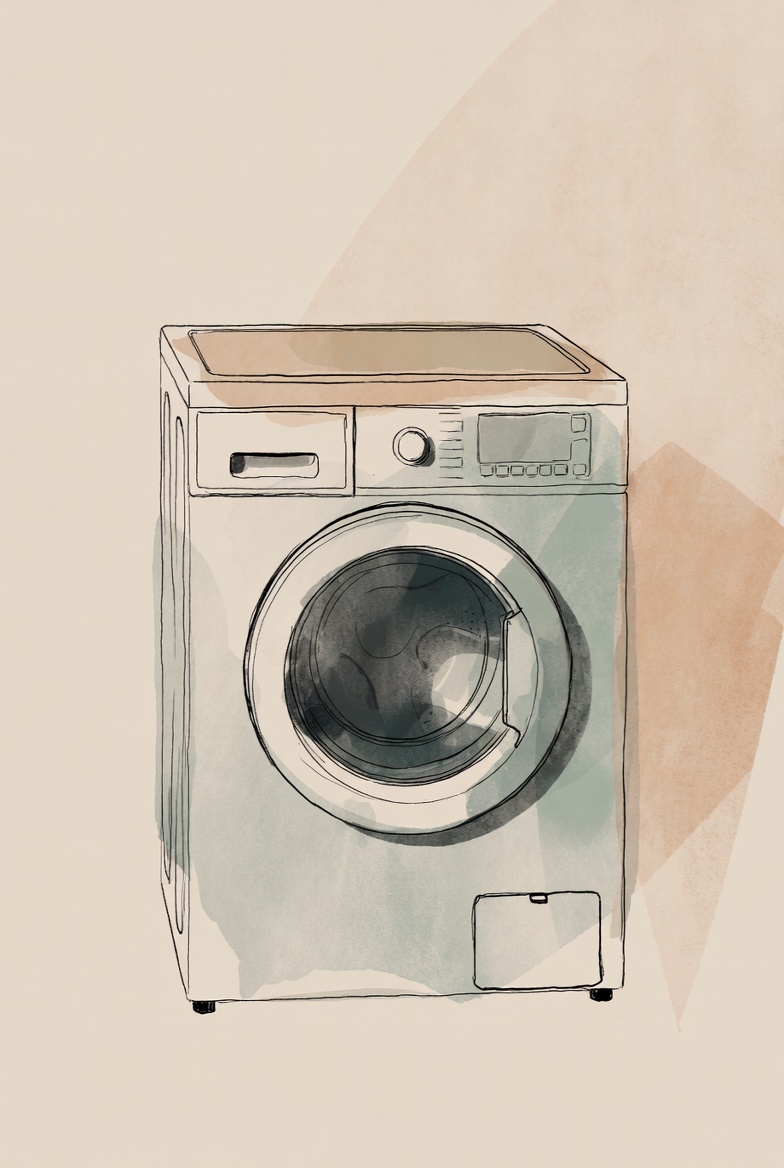
My father stopped working at an electronics factory in Cakung when he was 48 years old. He took the early retirement package offered by the company for efficiency reasons. With the severance money, he paid off the remaining mortgage on our house, bought service tools, and covered daily expenses—which he managed as frugally as possible. His final position was technician—the same role he had held since the day he first started working.
For the next twenty years, he ran his own repair business: fixing washing machines, refrigerators, air conditioners, fans, blenders, mixers, irons, gas stoves, and water dispensers.
He never advertised. No banners, no flyers. His business relied entirely on word of mouth. He depended heavily on our home phone to receive service orders. Ninety-nine percent of the calls came from his regular customers—who were, 99% of the time, our neighbors and relatives. The remaining 1% came from new people who had been referred by that 99%.
If a surgeon is an expert with his scalpel, then my father was an expert with his test pen. His work was always clean and neat. Undoubtedly good. He was extremely meticulous and never gave up easily. There was nothing he couldn’t fix, even if it took him several days.
The narrow front terrace of our house served as his workshop. It also became a storage area for tools, items being repaired, and second-hand goods he deliberately bought from scavengers to fix and resell. Over time, the items piled up more and more, until the living room had to be used as temporary storage. My mother often complained about it. So did I. But what could we do? That was where our money came from.
To give customers a clear picture of what they had to pay, my father would always explain which parts were broken and what needed to be repaired or replaced. He would also tell them the exact price of the spare parts and how much he had paid for them—he never marked them up.
However, he never told them how much his service fee was. Whether out of shyness or fear of seeming too expensive, he left it entirely up to the customer. This, of course, often left them confused—even though my father would accept whatever amount they gave him. If pressed, he would mention a reasonable figure. For example, twenty or thirty thousand rupiah for fixing a fan. Sometimes, he would even do it for free if the job was very simple for a neighbor.
Even so, there was one time my father was paid two hundred thousand rupiah just for pressing buttons on a digital washing machine. It looked like easy money, but it wasn’t that easy—because beforehand, he had to think quite hard for a long time.
One day, one of our neighbors (whose house was one block away) asked my father to repair their washing machine. Because the case was complicated, they brought the machine to our house. My father sometimes worked until late at night and even went out alone by angkot, a small public minibus, several times to buy spare parts. He covered all those costs upfront.
The job took about a week. In addition to the repair, my father also replaced the rusted bottom part of the washing machine. He cut thick zinc sheets with great difficulty to make the new piece. Once finished, the machine was returned to the customer and tested. The result was satisfying. The customer was pleased.
As usual, my father explained everything he had repaired, showed the detailed prices of the spare parts along with the receipts, and left the service fee up to the customer. He thought there was no way this neighbor—whom he knew well—wouldn’t give him a fair price. Especially since our neighbor was quite well-off: a civil servant working for the local government.
Indeed, the money my father received was quite a large amount. But it was only enough to cover the cost of the spare parts and the transportation to buy them. The profit was very small—if ten thousand rupiah could even be called profit. My father shook his head when he told us the story that evening. His face looked tired and he hadn’t even taken a bath yet.
Before that day, my father had never been disappointed by a customer when it came to payment. But what could he do except accept it with an open heart? He wouldn’t demand the amount he deserved. What mattered was that he didn’t want to make a big deal out of it and risk losing customers.
“Well, just consider it charity,” my father said, then headed to the bathroom.✦